Pest control in Phoenix, AZ is won or lost outside the house: bark scorpions, roof rats, ants and crickets almost always enter through weep screeds, block-wall voids, hose-bib penetrations, garage door corners and slab expansion joints before anyone sees them in a kitchen or a shower. Our technicians work that perimeter first, treat the harborage where the pests actually live, then tell you plainly what we found and what it costs — on-site minimum is $250, and the exact figure is confirmed at your home before any work starts.
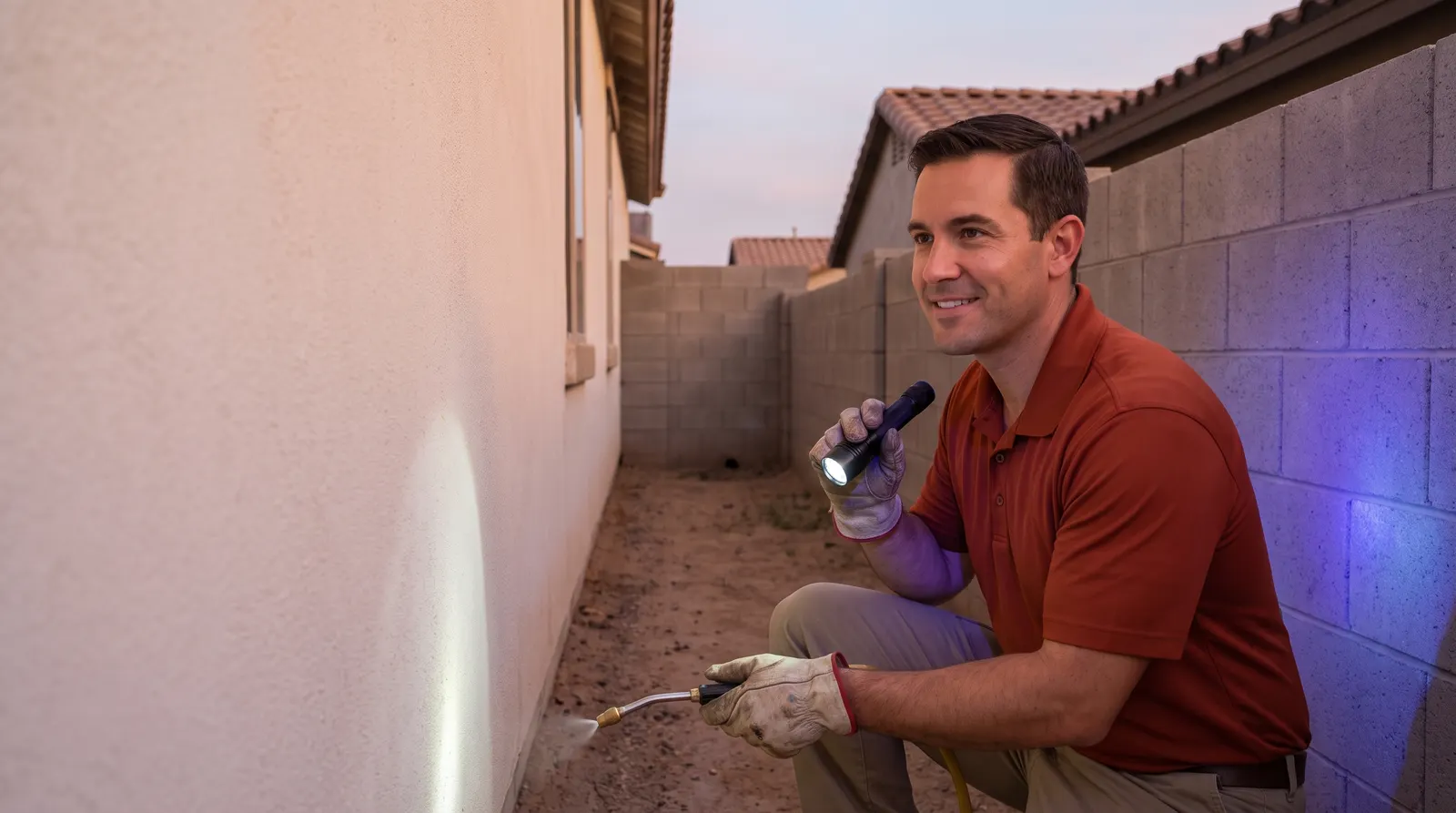
Every service reflects the same meticulous attention to detail — whether it's a single job or a larger pest control service project across Phoenix.
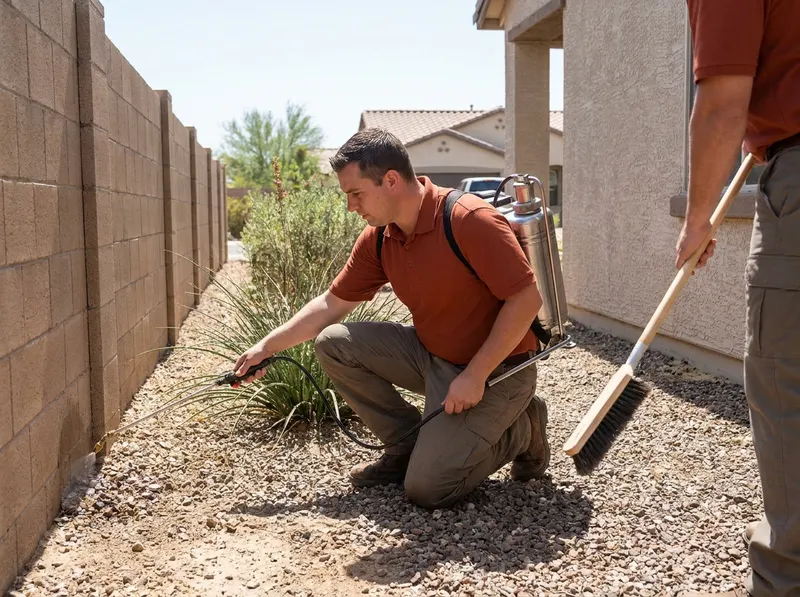
Bark scorpion control is our lead service because scorpions are the pest that ends sleep in this metro. Bark scorpions nest in the hollow cores of block walls, under flagstone and rip-rap, in stacked pavers, and behind stucco weep screeds where the wall meets the slab — then they follow crickets and small roaches inside through garage door corners, sliding-door tracks and gaps around hose bibs. Our technicians treat the wall line, the rock, the base of citrus and palms, and the transitions where irrigation keeps things cool and damp, then identify the physical gaps that need sealing so the route closes for good. Scorpions do not respond to a single hose-end spray from the hardware store because the population lives in voids that spray never reaches, and a scorpion can survive in a wall core for months between meals. Black-light inspection after dark is the honest way to see how many are actually on a lot, since scorpions fluoresce under UV and stay hidden in daylight. Homes backing desert preserve land near South Mountain Park and Preserve or Piestewa Peak in Phoenix Mountains Preserve carry the heaviest pressure and usually need the year-round version. A first scorpion-focused perimeter treatment typically ballparks $250 to $425 on a standard single-family lot, confirmed on-site.
View details →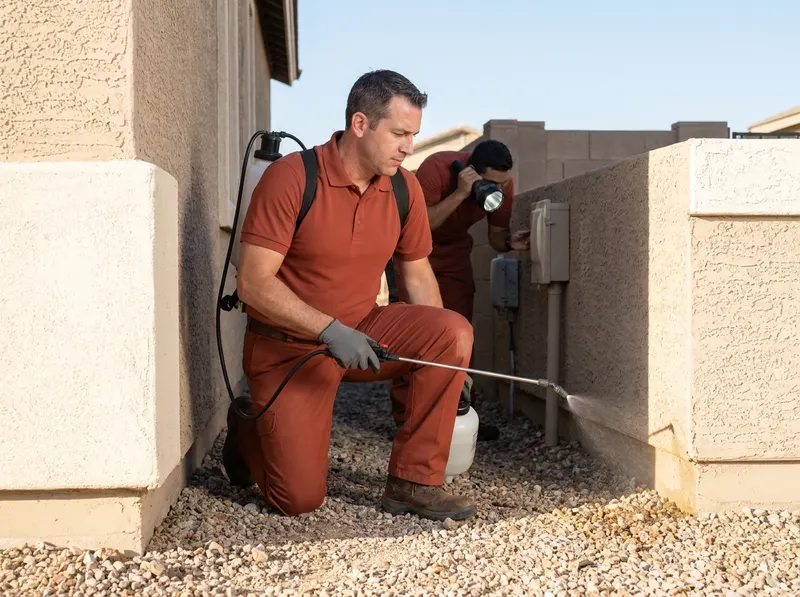
Quarterly perimeter pest control is the maintenance program that keeps a treated barrier intact through all four Phoenix pest seasons. Each visit re-treats the exterior wall line, the block-wall base, door thresholds, weep screeds, eaves, hose bibs, utility penetrations and the rock or gravel where scorpions, crickets, spiders and ants harbor, with interior work only where activity warrants it. The cycle matters because Phoenix heat, monsoon rain and flood irrigation break products down faster than in mild climates, and a barrier that goes untouched from March to October is not protecting anything in August. Quarterly service also gives a technician four looks a year at the same house, which is how a new roof-rat entry or a fresh termite tube gets caught early instead of after the damage. Plan pricing runs roughly $250 to $325 per visit depending on lot size, wall footage and how much rock landscaping surrounds the house. Ask about how re-treatment between scheduled visits is handled — we'd rather you know the terms before you book than after.
View details →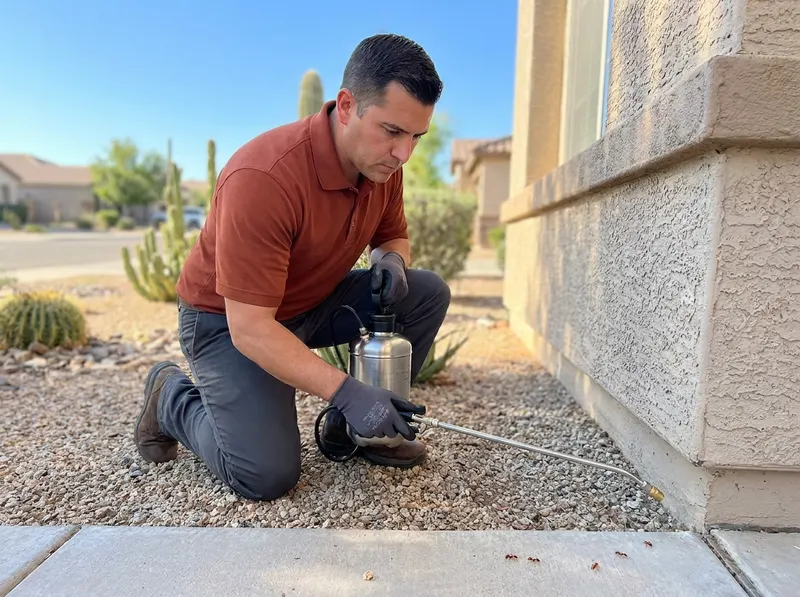
Ant control in Phoenix means identifying which ant you have, because the treatment changes completely. Pavement ants and southern fire ants trail in from cracked walkways and driveway expansion joints; pharaoh ants move indoors toward kitchen and bathroom moisture and split their colonies when sprayed with the wrong product; carpenter ants follow irrigated trees and wet wood. Our technicians track the trail back to the nest rather than wiping the visible line off the counter, then treat with baits or non-repellent products chosen for that species. Ant calls spike within days of the first monsoon storms and again after flood irrigation runs in older neighborhoods with mature citrus, when saturated soil pushes colonies toward the dry ground beneath a slab. Repeat ant problems in Phoenix are usually a water story, not a chemical story: a leaking drip emitter, a hose bib that weeps, or a planter watered against the stem wall will rebuild a colony faster than any product can hold it. Interior plus exterior ant service typically ballparks $250 to $450, confirmed on-site.
View details →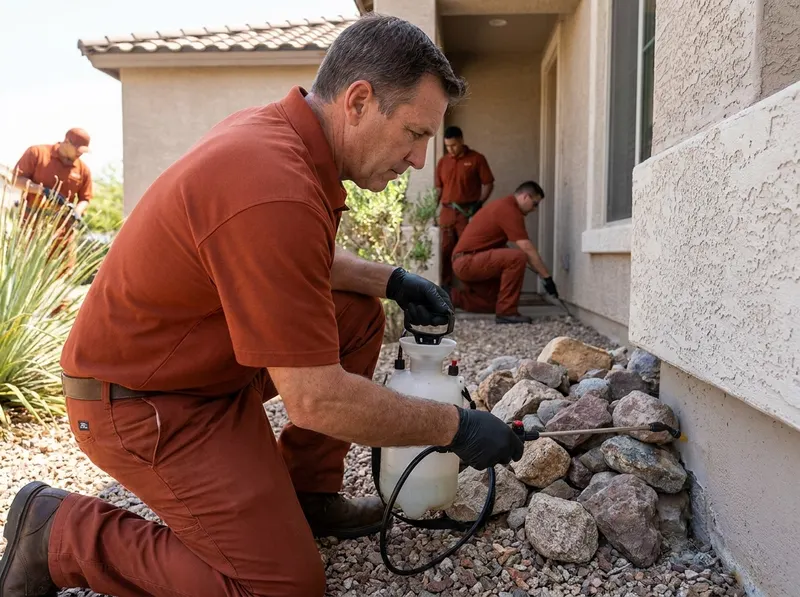
Black widow and spider control targets the web-building species that dominate Phoenix yards: western black widows in block-wall weep holes, under patio furniture, inside irrigation valve boxes, in pool-equipment enclosures and beneath BBQ islands, plus the desert recluse and the harmless funnel weavers people mistake for it. Treatment is two parts — knocking down and physically removing webs and egg sacs, then treating the voids and undersides where the next generation will build. Spiders are also a scorpion indicator: heavy web activity along a wall line usually means the same lot is feeding scorpions on crickets and small roaches. Spider pressure climbs with the scorpion curve from April through September and stays highest June through August. A spider-focused perimeter sweep generally ballparks $250 to $400 depending on wall footage, patio structures and how many valve boxes and equipment pads are on the property.
View details →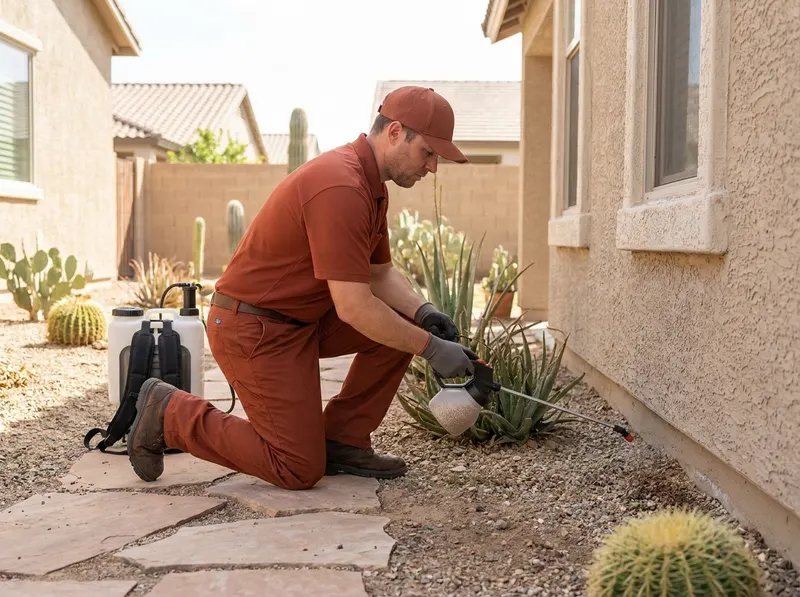
Cricket control matters in Phoenix because crickets are what scorpions eat. Indian house crickets swarm exterior lights, garage doors and pool decks after monsoon rain, then work under thresholds and into garages, where they become a food source that holds a scorpion population on your lot instead of the neighbor's. Our technicians treat the wall base, lighting perimeters, garage thresholds, door sweeps and the gravel or turf line where crickets stage at night, and we point out the exterior lighting and irrigation habits that are drawing them in. Monsoon season, roughly June 15 through September 30, is the busiest stretch for cricket calls, and schedules tighten within days of a big storm — booking about a week ahead is realistic then. A cricket-focused perimeter treatment usually ballparks $250 to $400.
View details →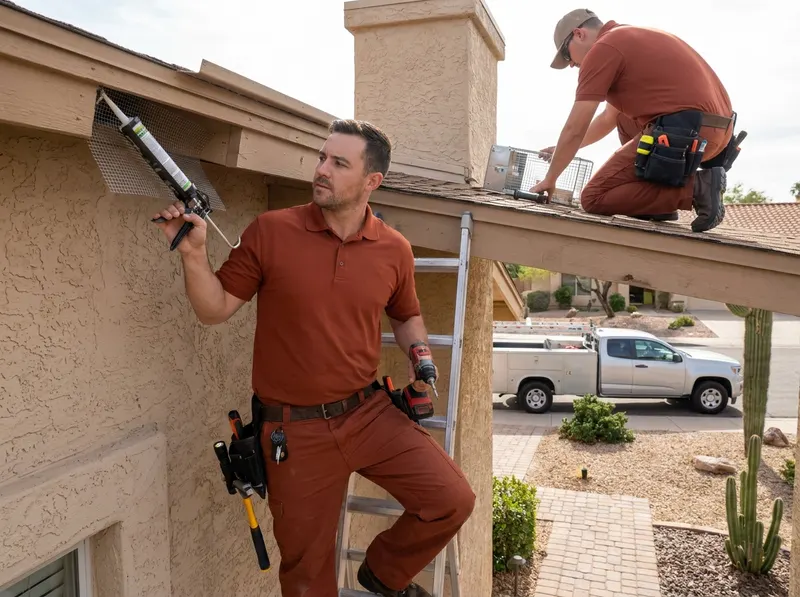
Roof rat trapping and exclusion addresses the rodent that has been established in central Phoenix for years, particularly the citrus-and-irrigation corridor running through Arcadia, Encanto-Palmcroft, Willo Historic District and Coronado Historic District. Roof rats climb — palm trunks, citrus limbs, bougainvillea, block walls, service drops — and enter at roof-tile edges, gable and dormer vents, dryer terminations, plumbing chases and the gap where a patio roof meets fascia. Trapping removes what's inside; exclusion is the part that keeps the next family out, and it's hardware and labor: mesh, sheet metal, sealant, vent screens. Signs worth photographing before we arrive include gnawed citrus hollowed out on the tree, greasy rub marks along a wall top, droppings on attic insulation or in a garage rafter bay, and running noises overhead just after dark. Fall through winter is the busiest stretch as temperatures drop and rodents move into attics and garages. Because scope depends on roof complexity and how many openings a house has, this service ranges widely — roughly $450 to $1,800 with exclusion, or about $300 to $650 for trapping alone — and we walk the roofline with you before quoting.
View details →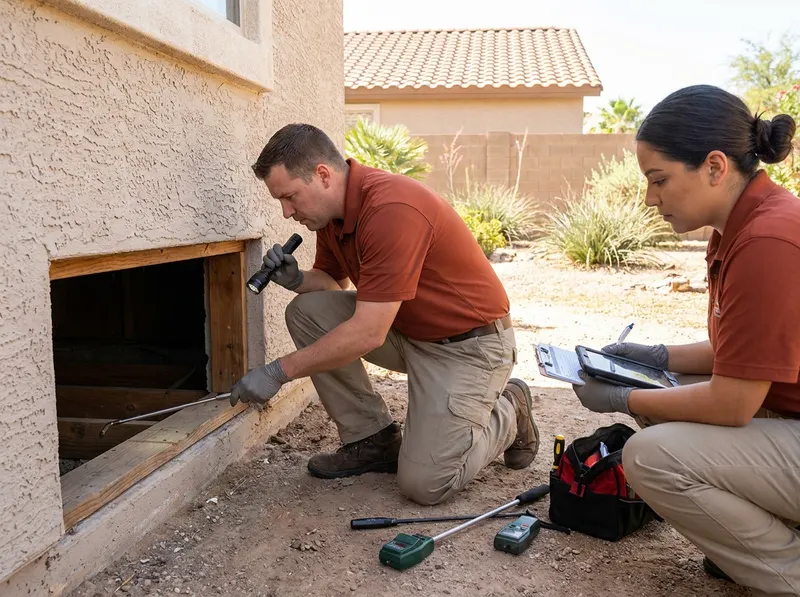
A termite inspection is a documented exterior-and-interior examination for subterranean termite evidence: mud tubes on block walls and garage slabs, shelter tubes at expansion joints, damaged baseboards, bath traps, and swarmer wings near windows. Desert subterranean termites are widespread across Maricopa County and work upward from soil through slab cracks, plumbing penetrations and stem walls — which is why an inspection focuses on ground contact points rather than just the walls you can see. Inspections cluster in spring and again after monsoon rains when swarmers appear, and real-estate-driven inspections spike through the spring and early-summer selling season. Inspection with a written report typically ballparks $250 to $350. If evidence is found, we explain the treatment options, the areas involved and the price range before you decide anything.
View details →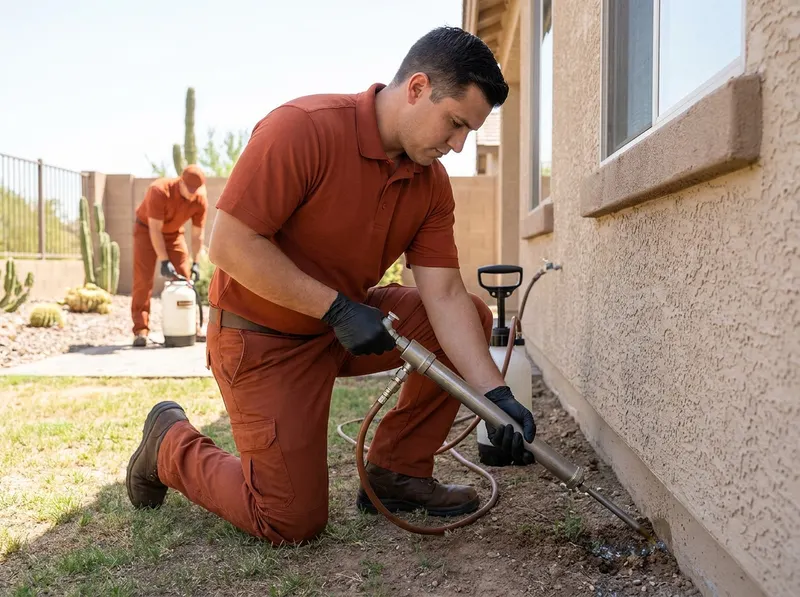
Subterranean termite treatment is the corrective work that follows a confirmed finding: a liquid termiticide applied to the soil and slab interface so foraging termites can no longer reach wood through the ground contact points they're using. In Phoenix that usually means trenching and treating along the stem wall, drilling and treating expansion joints, garage slab cracks, patio pours and plumbing penetrations, and addressing bath traps where tubes are visible. Scope drives the price more than square footage does — a spot or partial treatment on one wall and a garage slab generally ballparks $600 to $1,200, while full perimeter treatment on a typical single-story Phoenix home runs roughly $1,200 to $2,500. Old block construction, added-on patio slabs and post-tension foundations each change the approach, so we mark the drill line and the treatment areas with you before any equipment comes off the truck. We also tell you plainly what treatment does not do: it stops the active route, but existing damaged wood stays damaged until a carpenter replaces it.
View details →A pest control service in Phoenix is a pest-management provider that inspects a home's exterior, treats the harborage where desert pests live, seals the entry points they use — block-wall voids, stucco weep screeds, slab expansion joints, garage thresholds and roof lines — and then maintains that barrier on a scheduled cycle through the Sonoran Desert's pest seasons.
You get a firm, itemized quote for your pest control service before any work begins — no surprises, no pressure.
Careful prep, tidy work, and a full cleanup when we are done. We treat your home and belongings like our own.
The same trusted, background-checked team from the first call to the final check.
The real decision in Phoenix isn't which chemical — it's how often, and how much sealing you pay for up front. If you have one visible problem and a tight budget, choose a single one-time treatment: one visit, one price, from the $250 minimum, and it will knock down what's active right now. If scorpions are the reason you called, choose a recurring quarterly perimeter program instead, because scorpions live in the block wall and the rock, not in your baseboards, and a barrier that lapses for six months in summer stops being a barrier. The trade-off is simple math: one-time work costs less today and gets re-bought every time the population rebuilds; quarterly service costs about $250 to $325 per visit and keeps pressure on the same harborage year-round. If you have small kids, a pool deck and a bedroom on an exterior wall, quarterly is the version we'd choose for our own house. Does a plan lock me into a contract for years in Phoenix? Ask about term length when you call — we'll tell you the cycle, the per-visit price and how re-treatment between visits is handled before you agree to anything. The second fork is treatment versus sealing. If you want the fastest knockdown on active pests, treatment alone fits, and it is the cheaper half of the job. If you want the number of pests entering the house to drop permanently, pay for the sealing work too: weep screeds screened, garage-door bottom seals and corner gaps closed, hose-bib and conduit penetrations filled, pool-equipment and irrigation-valve penetrations addressed. Sealing runs roughly $150 to $600 depending on how many openings a house has and whether the stucco, block and thresholds are in good shape. The trade-off is a one-time labor cost against paying for chemical suppression forever on a house that is still fundamentally open at the ground line. For rodents the fork is trapping versus exclusion. If you want the noise in the attic to stop this week, trapping alone fits and starts lower — roughly $300 to $650 for the initial set plus follow-up checks. If you want it to stay stopped, choose trapping plus exclusion — sealing roof-tile gaps, gable vents, dryer terminations and the plumbing chases that roof rats climb — which runs materially higher, about $450 to $1,800, because it's labor and hardware, not spray. The trade-off is up-front cost against a repeat rodent bill every fall. Termites split the same way: an inspection with a written report is the low-cost, information-first choice when you're buying a home near Arcadia or Willo Historic District and need a document; a treatment is the higher-cost, problem-solving choice when mud tubes are already on the garage slab or the block wall, with spot work generally in the $600 to $1,200 band and full perimeter treatment on a typical single-story house running roughly $1,200 to $2,500. What if I only see one scorpion — do I need a full program in Phoenix? One scorpion means a route exists. A single treatment plus sealing the weep screeds and the garage threshold is a reasonable first step, and you can move to quarterly later if activity returns. For German cockroaches or bed bugs, skip the single-visit thinking entirely: both require a multi-visit cycle because eggs hatch after the first application, and a one-and-done attempt is the most common reason those two pests come back worse. Timing is the last real choice. If your calendar is flexible, book between December and February, when routine quarterly starts and preventive sealing have the shortest lead times and the most appointment slots. If you wait until the first week of July, expect to book a week out, because monsoon storms push crickets, scorpions and mosquitoes at every house on the street at the same time. The trade-off is convenience and price stability in winter versus reacting under pressure in summer.
Every project gets a firm, written price after a free on-site visit. Ranges below for orientation.
Tell us about your pest control service job and we'll send a clear, written quote — usually the same day. Or just call and talk to a real Phoenix pro.
(520) 677-4067
Phoenix pest pressure is a construction-and-water story more than a bug story. The metro is built on block walls, and a standard CMU wall is a stack of hollow cores that stays 20 degrees cooler than the rock in front of it — which makes the wall along your side yard the single best scorpion habitat on the property, and the reason we start every inspection at the wall line rather than the kitchen. Add the stucco weep screed, that thin slotted metal strip where the stucco stops a few inches above the slab, and you have a continuous entry gap running the full footprint of most Phoenix homes. Conditions then change by neighborhood: flood irrigation and mature citrus through Arcadia and the older lots near Camelback Mountain support roof rats and carpenter ants year-round; block-wall alleys and tight lots through Maryvale concentrate scorpions and crickets; new stucco developments in Laveen and Desert Ridge sit on freshly disturbed desert soil where scorpion and termite populations get pushed straight into the first houses built; and desert-edge homes in Ahwatukee Foothills backing South Mountain Park and Preserve, or hillside lots near Piestewa Peak and Papago Park, take direct pressure from open preserve land no barrier chemical alone will hold. Monsoon runs roughly June 15 through September 30 across Maricopa County, and the pattern after a storm is consistent — crickets swarm exterior lights within a night or two, scorpions follow the crickets, and ant colonies pushed out of saturated soil head for the dry ground under a slab. That is why our schedule tightens within days of a big blow, and why March and early April are the smart weeks to get treated before the surge instead of during it.
Free estimates for Phoenix & the surrounding area.
 Nestleap Pest Control Service