Nestleap Pest Control ServiceNestleap Pest Control Service

German Cockroach Control in Phoenix, AZ

German cockroaches are the small tan roach with two dark stripes behind the head, and in Phoenix they show up in kitchens and bathrooms rather than yards. They ride in on cardboard, grocery bags, used appliances, and…
Call (520) 677-4067 →(520) 677-4067
German Cockroach Control in Phoenix, AZ
Quick answer
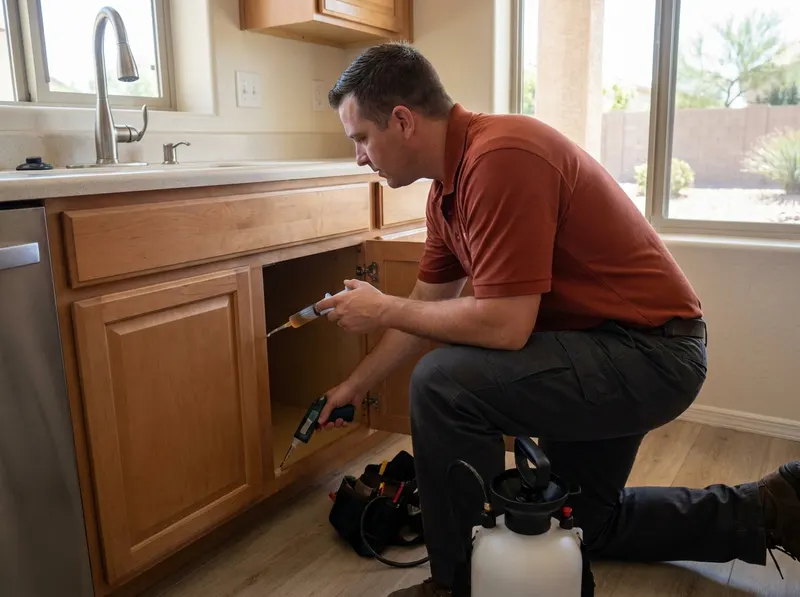
  • What's included: full interior inspection with a flashlight and mirror, sticky monitors in kitchen and bath, gel bait and insect growth regulator into cabinet voids, hinge gaps, motor housings and plumbing penetrations, plus a written prep sheet for the homeowner.
  • How fast: phone lines are answered by a local Phoenix crew at (520) 677-4067, and most German cockroach visits are scheduled within a few days.
  • What it costs: German cockroach treatment in Phoenix starts at a $250 minimum and commonly runs $250 to $450 for a single unit or home, with multi-visit programs quoted higher.
  • What we take: cash, card, and check; every price is confirmed in writing before any product goes down.
  • How to book: call (520) 677-4067 and describe where you see them (under the sink, behind the fridge, in the dishwasher panel) so the tech arrives with bait, IGR, and monitors ready.
German cockroaches are the small tan roach with two dark stripes behind the head, and in Phoenix they show up in kitchens and bathrooms rather than yards. They ride in on cardboard, grocery bags, used appliances, and second-hand furniture, then settle into the warm, tight voids they prefer: the motor compartment under a refrigerator, the insulation panel of a dishwasher, the seam where a countertop meets the backsplash, the hinge cups inside cabinet doors. A female carries an egg case with roughly 30 to 40 eggs, which is why a handful in week one becomes a nightly problem by week six. German cockroaches do not come in from the desert — they breed inside, so the fix is inside. This is the one service where our sealed-perimeter approach takes a back seat. For bark scorpions and ants, we work the block walls and weep screeds outside. For German cockroaches, the work is crack-and-crevice: bait placed into the exact voids they occupy, an insect growth regulator to break the egg-to-adult cycle, and monitors left behind so the count is measured instead of guessed. A baseboard fog or a hardware-store bomb usually makes it worse — repellent aerosols scatter the population deeper into wall voids and into neighboring units. Bait works because roaches have to eat it, and that means keeping competing food and repellents off the surfaces we treat. The housing stock shapes the job. In the Coronado Historic District and Willo Historic District, original 1920s and 1930s kitchens have open cabinet toes, gaps behind tile, and pantry voids that give a population somewhere to hide from a surface spray, so those visits take longer and lean on deep void placements. Duplexes and fourplexes in Maryvale and rental apartments near Roosevelt Row and Desert Ridge share plumbing chases, and a single infested unit will feed the ones beside it — treating one apartment while the neighbor goes untouched is how a landlord pays twice. Newer Laveen and Ahwatukee Foothills homes usually get German cockroaches by importation: a moving truck, a used washer, a returned appliance box. In Arcadia, flood irrigation and mature citrus bring a different insect entirely — the big American cockroach out of drains, alleys, and irrigation boxes — and that one is treated outside-in, not with kitchen bait. Identify the species first; the two jobs share almost nothing. Expect two or three visits, roughly two to three weeks apart, and expect homework. Clearing the sink of dishes overnight, wiping grease off the range hood and stove sides, pulling food out of open cardboard, and fixing a dripping shutoff under the sink all raise the kill rate, because a German cockroach can live on crumbs and condensation alone. We tell you what to do and why, then we come back and read the monitors — clean traps at the second follow-up is what finished looks like. Structural pest control in Arizona is regulated by the Arizona Department of Agriculture, so ask any company working inside your Maricopa County home to identify itself and its applicator before product goes down. We answer that question every time it's asked. Sealed perimeter, treated interior — pests stay outside.

What it costs

German cockroach initial interior treatment, apartment or condo$250 - $375 (ballpark)
German cockroach initial treatment, single-family Phoenix home$275 - $450 (ballpark)
Multi-visit program (initial plus two follow-ups, monitors included)$425 - $750 (ballpark)
Duplex / fourplex, priced per unit treated same day$250 - $400 per unit (ballpark)
Heavy or long-standing infestation with sanitation and moisture issues$500 - $900+ (ballpark)
Follow-up visit added to an existing German cockroach program$250 minimum (ballpark)

Every job gets a firm, written price after a free on-site visit.

Common questions

How much does German cockroach control cost in Phoenix?
German cockroach control in Phoenix starts at a $250 minimum, with most single homes and apartment units landing between $250 and $450 for the initial interior service. Multi-visit programs and multi-unit buildings are quoted higher. These are ballparks — the exact price is confirmed at a free on-site visit, in writing, before any treatment begins.
Why do German cockroaches keep coming back in my Phoenix apartment?
In Phoenix apartments and fourplexes, German cockroaches usually return because a neighboring unit was never treated or because a repellent spray scattered the population into shared wall and plumbing chases. Lasting control needs bait and an insect growth regulator placed in harborage, follow-up visits two to three weeks apart, and — in multi-unit buildings around Maryvale, Roosevelt Row, or Desert Ridge — adjoining units treated on the same schedule.
Is the small striped roach in my Phoenix kitchen the same as the big roach in the alley?
No. The small tan roach with two dark stripes in a Phoenix kitchen is a German cockroach that breeds indoors, while the large reddish-brown roach coming out of alley drains and irrigation boxes in areas like Arcadia is typically an American cockroach. German cockroaches are treated with interior crack-and-crevice bait; American cockroaches are handled at drains, sewer lines, and the exterior perimeter.
How should I prepare my Phoenix home before German cockroach treatment?
Before a German cockroach visit in Phoenix, clear dishes from the sink, wipe grease from the stove sides and range hood, empty open cardboard food packaging, seal pet food, and stop using aerosol bug sprays in the kitchen and bath. Repellent sprays push roaches away from the bait they need to eat, and standing water under a leaking sink shutoff keeps a population alive on almost nothing.
How many visits does German cockroach treatment take in a Phoenix home?
Most Phoenix German cockroach jobs take two to three visits spaced roughly two to three weeks apart, because egg cases already inside the walls hatch after the first service. Sticky monitors left in the kitchen and bathroom show whether the count is dropping, and older kitchens in the Willo Historic District or Encanto-Palmcroft with open cabinet toes and deep voids can need an extra visit.

Ready to get started?

Tell us about your german cockroach control job in Phoenix and we'll send a clear, written quote — usually the same day.