Desert subterranean termites live in native Sonoran Desert soil across Maricopa County, which means an inspection here is not a hunt for something rare — it is a check on whether foraging colonies have found a way into…
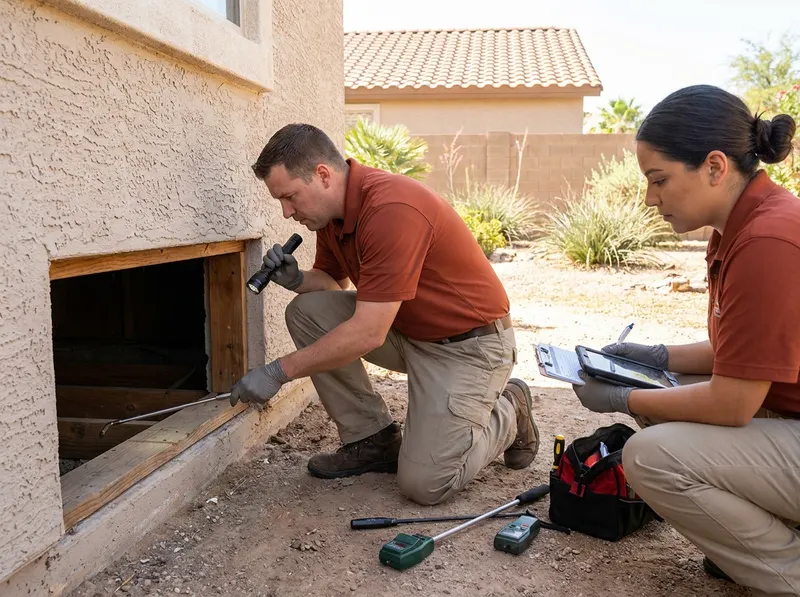
Desert subterranean termites live in native Sonoran Desert soil across Maricopa County, which means an inspection here is not a hunt for something rare — it is a check on whether foraging colonies have found a way into your structure and how far they have gotten. In Phoenix the evidence is usually outside first: pencil-lead-thin mud tubes climbing the shaded side of a block wall, mud packed into a slab expansion joint at the garage door, or a thin dirt trail up a stucco stem wall behind an oleander. We inspect the perimeter before the interior, because that is where the story starts and where sealing work would eventually happen.
Housing stock changes what we check. In Willo Historic District, Coronado Historic District and Encanto-Palmcroft, we spend extra time on wood door jambs, original baseboards, raised-foundation crawl access and the sill areas where older framing meets masonry. In Arcadia, mature citrus, turf and flood irrigation keep soil moisture high year-round, so we note irrigation lines, planters built against the house, and wood-to-soil contact that quietly bridges the slab. Newer slab-on-grade neighborhoods like Laveen and Desert Ridge are not exempt — activity within a few years of construction is common in this valley, and stucco carried too close to grade is a frequent finding. Along block-wall alleys in Maryvale, tubes often show on the north-facing side that stays shaded and damp. Moon Valley hillside lots add retaining walls and drainage to the checklist, and Ahwatukee Foothills homes backing toward South Mountain Park and Preserve sit against undisturbed desert soil where colonies forage naturally. Roosevelt Row mixed-use buildings get shared-wall and utility-chase attention.
Decide between a standalone inspection and going straight to treatment based on what you already know. An inspection with a written report is the right call when you are not certain what you have — you saw wings on the patio after a monsoon storm, a neighbor just had a trench-and-treat done, a lender or escrow file needs documentation, or you want to verify a previous company's work before renewing a warranty. If live activity is already confirmed and visible, a standalone report mostly documents what you can see, and the practical move is a treatment proposal that includes the inspection in its scope. The trade-off is honest: a report costs money and does not kill termites. What it buys you is evidence — so you are not paying for full perimeter trenching and drilling on a hunch, and so you can compare quotes against a written baseline instead of a driveway sales pitch.
Swarm season matters for timing. Desert subterranean termites in Phoenix typically fly at night after summer monsoon rains, and homeowners find wings around porch lights and pool decks in July through September. Spring brings a second wave of calls. If you find wings, keep a few in a bag or on tape — identification is faster and cheaper than guessing, and wings alone do not always mean the structure is infested. Termite work in Arizona is licensed at the state level, so ask any company you call, including us, about licensing and what their report covers before money changes hands. Our report states what was inspected, what was found, what was inaccessible, and what the findings support — nothing padded to justify a treatment.
Every job gets a firm, written price after a free on-site visit.
Tell us about your termite inspection & written report job in Phoenix and we'll send a clear, written quote — usually the same day.
 Nestleap Pest Control Service