Black widows in Phoenix are a structural problem more than a landscaping one. Nearly every home in this metro is ringed by concrete block wall, and the base of that wall — plus the weep-hole gaps, the cinder cavities…
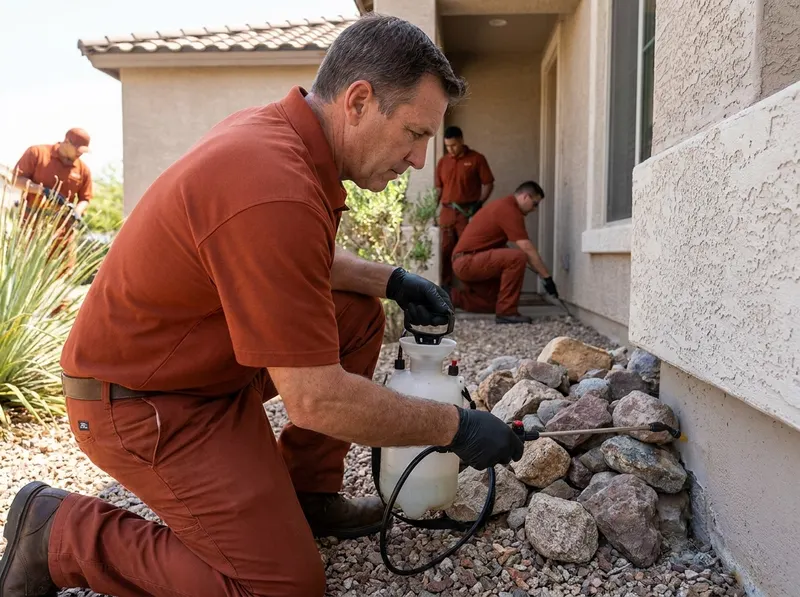
Black widows in Phoenix are a structural problem more than a landscaping one. Nearly every home in this metro is ringed by concrete block wall, and the base of that wall — plus the weep-hole gaps, the cinder cavities at the ends of a run, and the shaded gap behind a wall-mounted A/C disconnect — is prime widow real estate. Add the irrigation valve boxes buried flush in the gravel and the water meter box at the sidewalk, and a single lot can hold a dozen harborage points a homeowner never opens. De-webbing is not cosmetic; removing the web and the egg sacs is what actually cuts the next generation. A widow egg sac can hold dozens of spiderlings, and leaving sacs in place after treatment is the most common reason a property looks clear for three weeks and then reads worse than before.
Where you live changes the plan. In Ahwatukee Foothills and along the South Mountain Park and Preserve edge, rock landscaping and boulder walls give widows cool ground-level cavities and give giant crab spiders a route to the eaves — those homes need heavier attention to the desert-facing side and to garage door bottom seals. In Arcadia and Moon Valley, mature citrus, flood irrigation and older block walls with soft mortar joints produce the classic combination of heavy insect traffic and endless crevices. Laveen's newer stucco developments look tidy but have long shared wall runs, uncapped block ends and open weep screeds behind fresh landscaping. Maryvale's block-wall alleys and detached garages are consistent widow producers. In Willo Historic District, Encanto-Palmcroft and Coronado Historic District, the pressure moves to detached garages, brick foundation ledges, basement stairwells and old wooden gate frames. Desert Ridge and North Phoenix homes with lots of exterior wall-pack lighting see the food chain problem first: lights draw moths and crickets, and spiders build where the food is.
Decide between a one-time service and a recurring plan based on pressure, not on the calendar. A one-time spider service is the right call when the problem is contained and recent — one heavily webbed patio, a garage nobody entered all summer, a house going on the market, or a rental turnover in Roosevelt Row. Expect it to clear what's present and hold a residual barrier for a period of weeks. The trade-off is honest: it does nothing about the neighbor's wall, the alley, the wash, or the next generation hatching out of a sac in a bougainvillea nobody could reach. Properties backing to open desert, a canal, a preserve trailhead near Piestewa Peak, or an irrigated Maricopa County lot with citrus and dense ground cover almost always do better on recurring exterior perimeter service with de-webbing on every visit, because the reinfestation source is off your property.
On licensing and product: pesticide application in Arizona is regulated, and treatments here are performed by licensed applicators following label rates and label-restricted placements — no product goes into a void or a valve box that the label doesn't allow. That matters practically, because the strongest widow work is void-directed dust and crack-and-crevice application in places kids and pets can't reach, not broadcast liquid across a play yard. If the inspection shows the real driver is lighting, stacked firewood, cardboard storage against a garage wall, or an unsealed garage door sweep, you'll be told that too — the goal is a sealed, unwelcoming perimeter, not a return visit every month you don't need. Call (520) 677-4067 and we'll walk the property first.
Every job gets a firm, written price after a free on-site visit.
Tell us about your black widow & spider control job in Phoenix and we'll send a clear, written quote — usually the same day.
 Nestleap Pest Control Service